Thanks for visiting my website!

How to Turn Your Blog Into a Book (Without Starting Over)
You don’t need a blank page to start a book.
Pam Seino
2/25/20265 min read


If you’ve been blogging consistently for months — or years — you may already be sitting on the content for your next published book.
Most people assume writing a book means starting from scratch, and for that reason, many never take the plunge.
But that's not the case. In fact, using your blog as a foundation might be the smartest, fastest, and lowest-risk way to create a book — because the market has already tested your ideas.
Let’s look at exactly how to turn your blog into a book with minimal rewrites.
Step 1: Audit Your Blog for “Book-Worthy” Content
Not every post belongs in a book, but patterns do. Here's what you should look for:
Posts that get consistent traffic
Topics your audience asks about repeatedly
Articles that naturally fit into a sequence
Evergreen content (not trend-based)
Posts that teach a framework, system, or method
It won't take long before you start to notice clusters.
For example:
A series on productivity habits
Multiple posts on affiliate marketing basics
Several deep dives into content creation
A group of health posts around blood sugar or brain health
Those clusters are your book skeleton.
Pro Tip: Export your blog titles into a spreadsheet and categorize them by theme. You’ll see your book outline reveal itself. This is also a good case use for AI: feed your blog titles into an AI engine and ask for a logical outline and title. For even more directed results, feed the URLs of your published blog articles so the AI engine can review the content.
Step 2: Identify the Core Promise
A blog post informs, but your book has the ability to transform. Make sure it contains clear objectives, such as:
What problem does it solve?
Who is it specifically for?
What outcome will they achieve?
Be careful that it's not too ambiguous. For example, instead of writing about consistency issues for entrepreneurs, create "A step-by-step system for staying consistent and keeping motivation steady."
The second example takes the chapters of your blog content and turns it into a guided journey.
Step 3: Organize Posts Into Logical Chapters
Now it’s time to group and reorder.
Example structure:
Part 1: Foundations
– Mindset
– Clarity
– Goal setting
Part 2: Systems
– Daily routines
– Automation
– Content batching
Part 3: Scaling
– Monetization
– Audience growth
– Repurposing content
Each blog post can be turned into a chapter, a section within a chapter, or supporting content you expand on. That way, you're not rewriting every.damn.thing, you're simply restructuring what you already have. And speaking of not rewriting....
Step 4: Fill the Gaps (Don’t Rewrite Everything)
What many writers miss (and the reason they never get around to writing that book) is that you don’t need more content. You need the connective tissue for the content you already have.
What you'll probably need to add are:
Transitions between ideas
Personal stories (this is very powerful!!!)
Case studies (almost as powerful as personal stories!)
Clear step-by-step frameworks
Exercises or action steps
You're remodeling, not building from scratch. You’re tightening up your language, identifying and removing repetitive words/sentences/ideas, adding cohesion.
That’s it!
Step 5: Eliminate “Blog Voice” Fragments
Blogs are written to quickly capture your audience's attention. They are often scanned quickly and are intended to get you ranked on search engines. By contrast, books are written to be read sequentially (when relevant), flow more smoothly, and deliver more value. Because of these differences, you'll want to identify and remove the following:
Any redundant introductory paragraphs
Any SEO-heavy phrasing
Repeated explanations (really, just identify and remove any repetitive information)
Excessive bullet-point stacking
By doing this, your flow will be much smoother and more polished, while retaining the substance of your original content.
Step 6: Add Authority and Positioning
There are no new ideas, just new ways of presenting old ideas. Therefore, make sure you buttress your book with research/data to authenticate your content, include quotes by experts in the field, cite relevant case studies, and of course your own personal experiences.
When you turn content into a book, you’re not just sharing information — you’re positioning yourself as the authority behind it. And that is what will get you noticed. That is a powerful, important shift.
Step 7: Decide on the Publishing Strategy
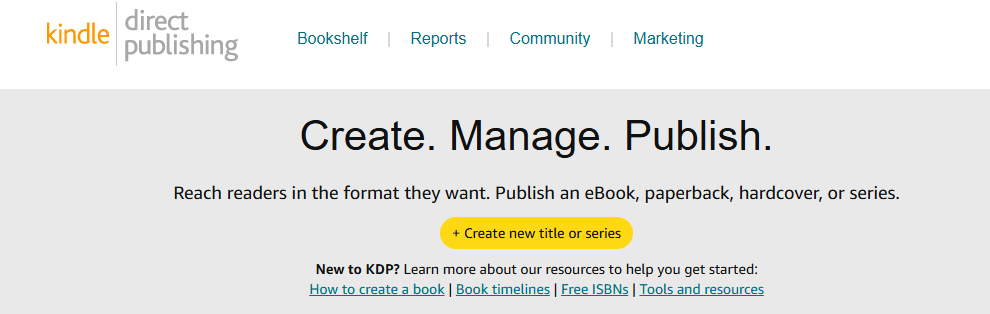
There are several options when it comes to publishing your book. My personal favorite (shared by many writers) is to self-publish via Amazon KDP. It's super easy, free, and gets your book available to your audience faster than just about any other method. KDP also allows you to offer your title free for a certain number of days per specified time frame, which is a powerful marketing tool. However, there are other options available, if you prefer not to use KDP. You can create a lead-generation book, bundle it into a course, offer it as a bonus inside a program, or use it as a credibility asset for speaking or coaching. Or a combination of all of the above.
Your blog's job is to build traffic and gain trust from your audience. Your book's job is to build authority. When you combine the two, you're building a brand.
Step 8: Use Your Blog Audience as Your Launch Team
If you've been blogging for a while, then you already have readers. Lean on them! Instead of wondering, “Will anyone buy this book?” you can:
Survey your audience
Share behind-the-scenes progress
Offer beta copies
Build anticipation before launch
Take as much guesswork out of the equations by validating your book in real time.
Why This Works So Well
Turning your blog into a book is powerful (and easier than you might think) because your content has already been created and your ideas are already tested. Your audience has (hopefully) provided comments and feedback. You'll minimize creative burnout, and best of all, you'll syndicate your assets by creating one product and turning it into more. So that one idea can morph from a blog post → email content → social media posts → course → book → speaking topic. That, my friend, is golden leverage.
Final Thought: You’re Probably Closer Than You Think
If you’ve written 30–50 quality blog posts around one core topic, you likely have 60–70% of a book already written. So you don't need a ton more content - you just need to structure, position, and refine it.
So before you open a blank document and start typing that AI prompt "What should I write a book about?", open your blog archive instead. Your book might already be there!
Join Connie Ragen Green's Syndication Optimization course for more on how to repurpose your content. For a deeper dive into turning your blogs into a book, I highly recommend Connie's book Book. Blog. Broadcast as well as her course Book to Blog Author System.